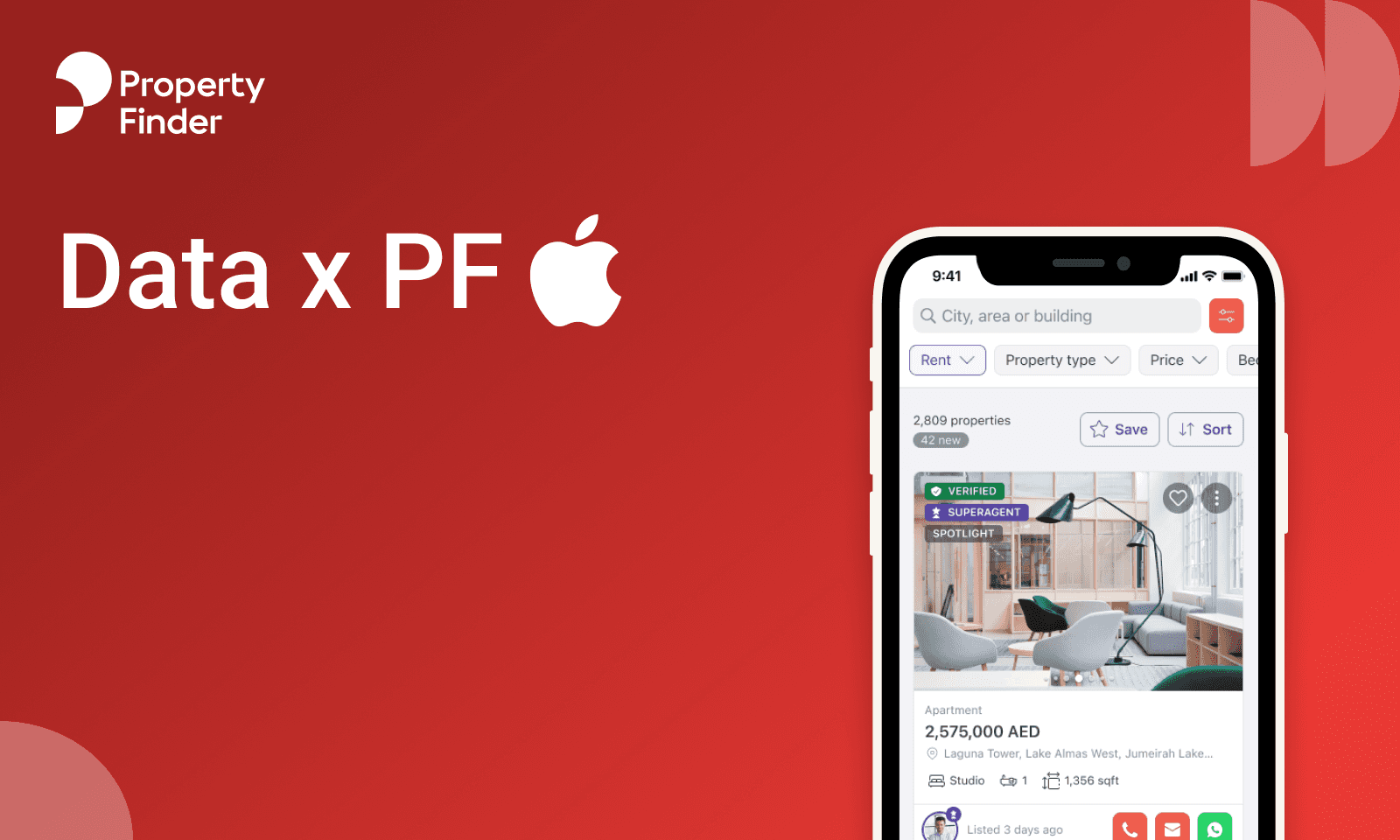
Property Finder · 2026
Turning acquired market data into everyday decision-making
When Property Finder acquired a data intelligence company, the challenge was how to integrate it within the application. I led the research and design work to embed transaction history, tower insights and community intelligence directly into the user journey.
- Role
- Product design lead
- Duration
- 2 months
- Client
- Property Finder
Case study still in construction.
Problem
Despite the acquisition, the data remained largely inaccessible to the people who needed it most. Users browsing listings had no visibility into how a building had performed historically, what a community was actually like to live in, or whether the asking price reflected real market conditions.
The insights existed, they just weren't showing up where decisions were being made. The task was to identify the right touchpoints across the mobile app to surface this intelligence contextually, so users could move from browsing to deciding with confidence.
Goal
Close the gap between data and decision.
Success metrics
- Monthly active users
- Users on the dedicated Market Insights page as a proportion of total app users.
- Decision confidence
- Shift in time-to-decision — the time between a first search and a first enquiry — for users who engaged with market data surfaces versus those who did not.
- Retention
- Retention of high-intent users, specifically investors and serious buyers identified as the primary audience for the insights features.
- Drop-off rate
- Reduction in drop-off at the listing page evaluation stage, measured against the pre-launch baseline surfaced in Hotjar.
What the research revealed
- Filters
- The SERP and listing page dominated user time — but Hotjar showed users stalling and dropping off at the point where they needed confidence to act, not more listings.
- Session recordings
- Recordings surfaced a scroll behaviour on listing pages indicating users were looking for something the page wasn't giving them: context around the property, the building and the area.
- User interviews
- Interviews identified a distinct research mode with no home in the app — serious buyers and investors were doing due diligence outside Property Finder entirely, using fragmented third-party sources.
- Stakeholder interviews
- Internal discussions confirmed the tension: surfacing data on the SERP risked cluttering a page built for speed, while hiding it behind the listing page risked it never being seen — pointing to a dedicated insights destination.
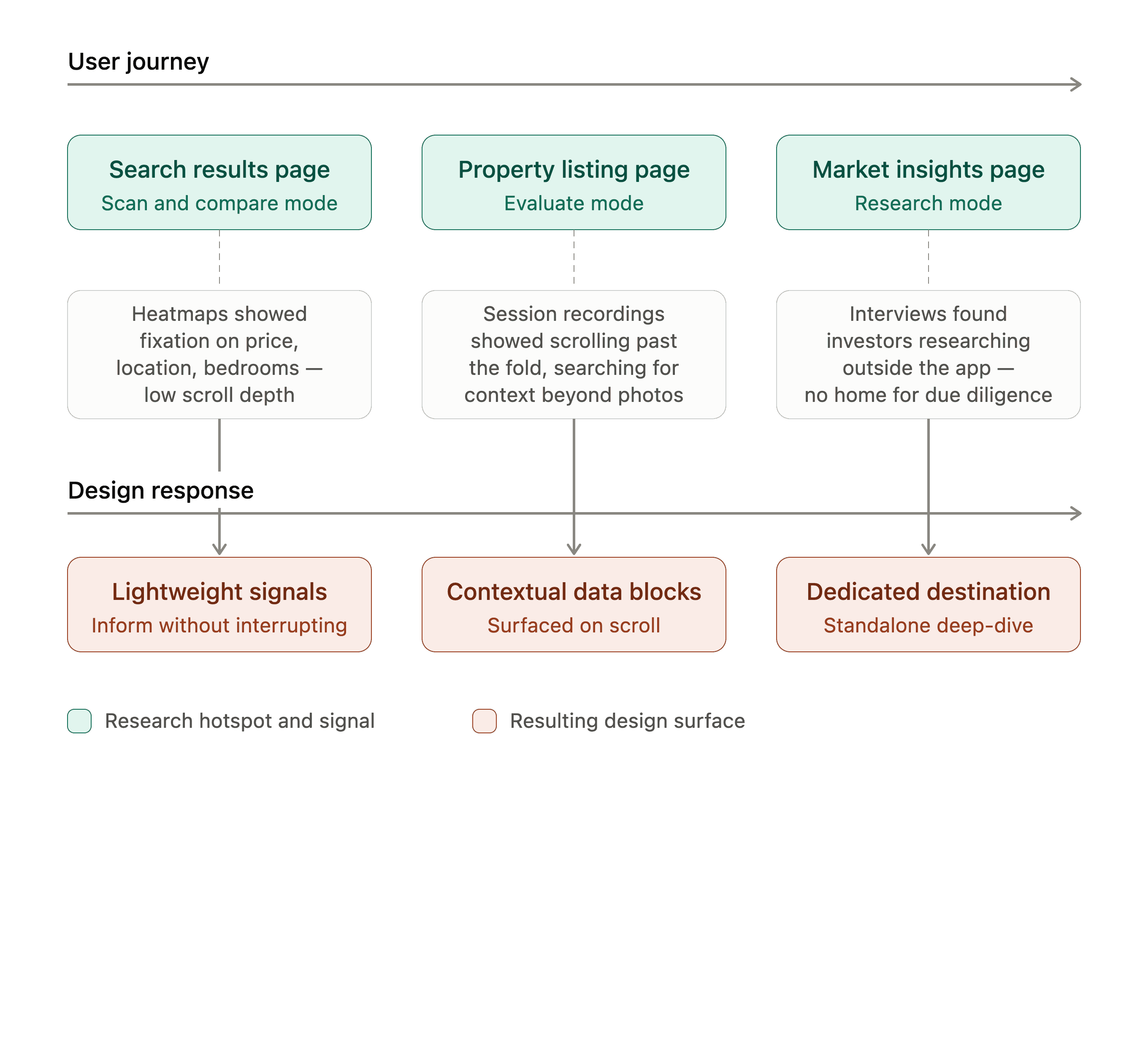
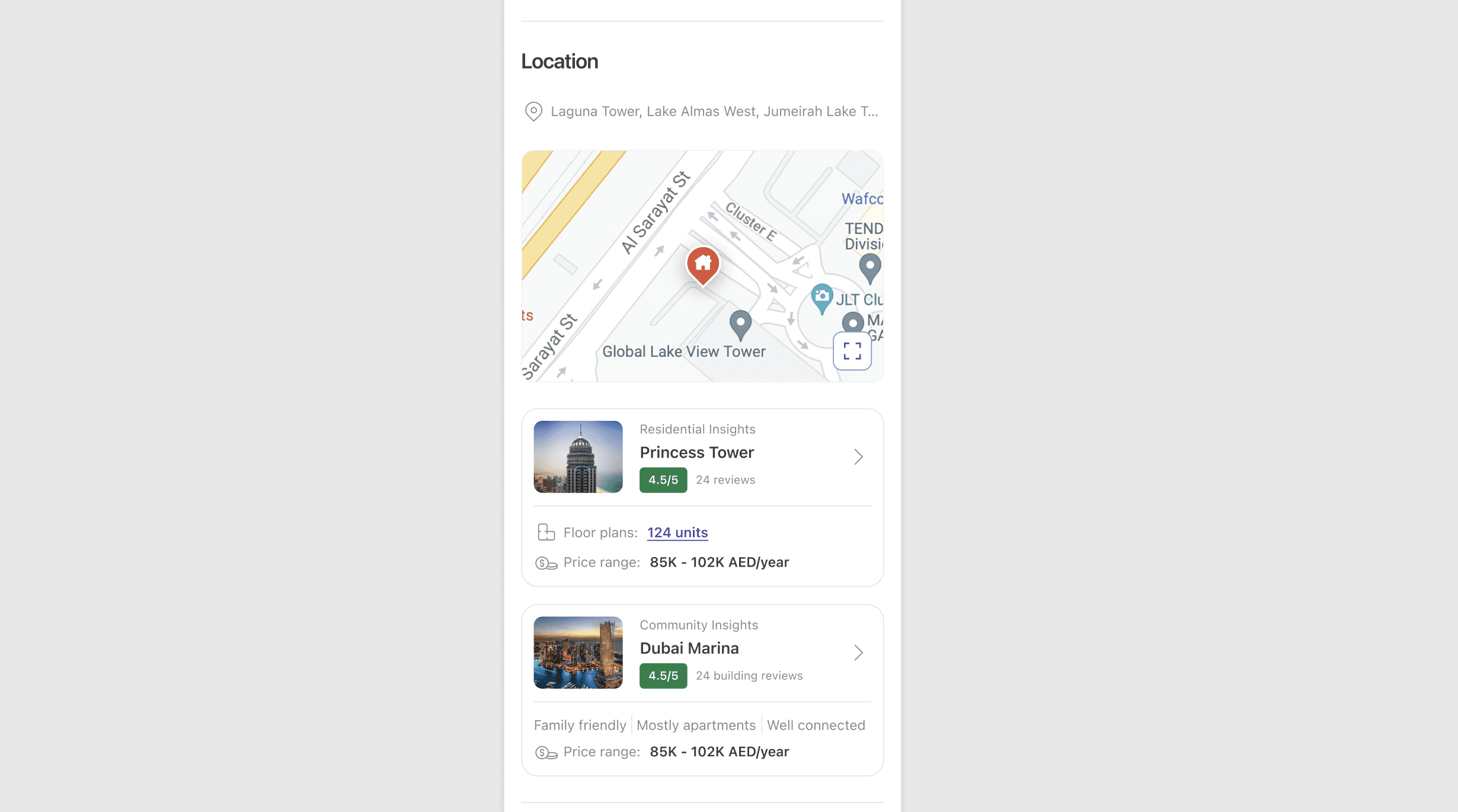
Design decision 1: Embedding community and tower insights into the listing page
The listing page was where user attention was already deepest, and where session recordings showed the clearest signal: users scrolling well past the fold, searching for something the page wasn't giving them.
A user who has opened a listing has already shown intent. The question they're holding at that point isn't "is this property interesting?" anymore, it's "can I trust this property, this building, this area?"
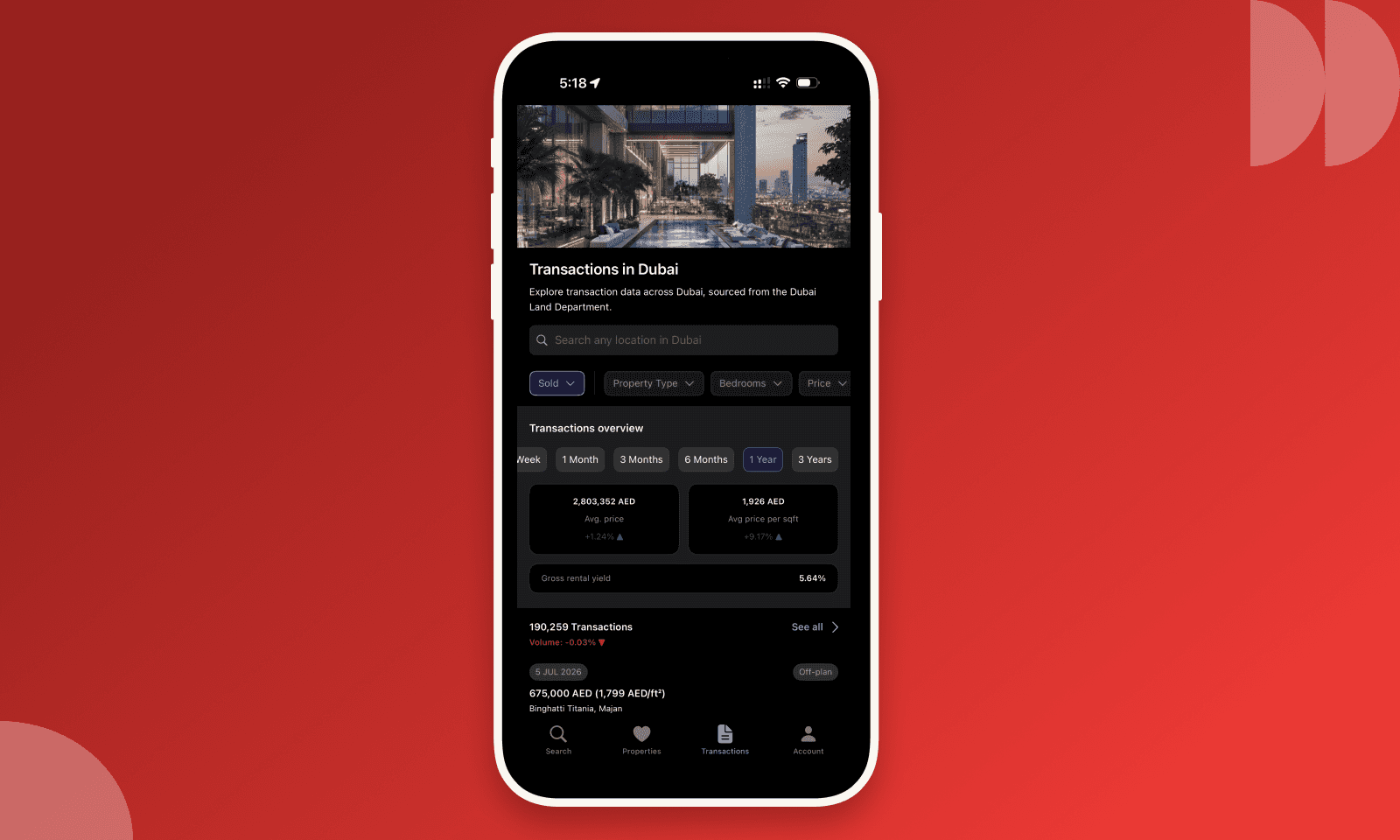
Design decision 2: A dedicated Market Insights page
Building a dedicated Market Insights page accessible directly from the main navigation was the response to that finding. This wasn't a feature added for completeness — it was designed to capture an entire user session type that Property Finder was previously losing to external tools.
Design decision 3: The price map
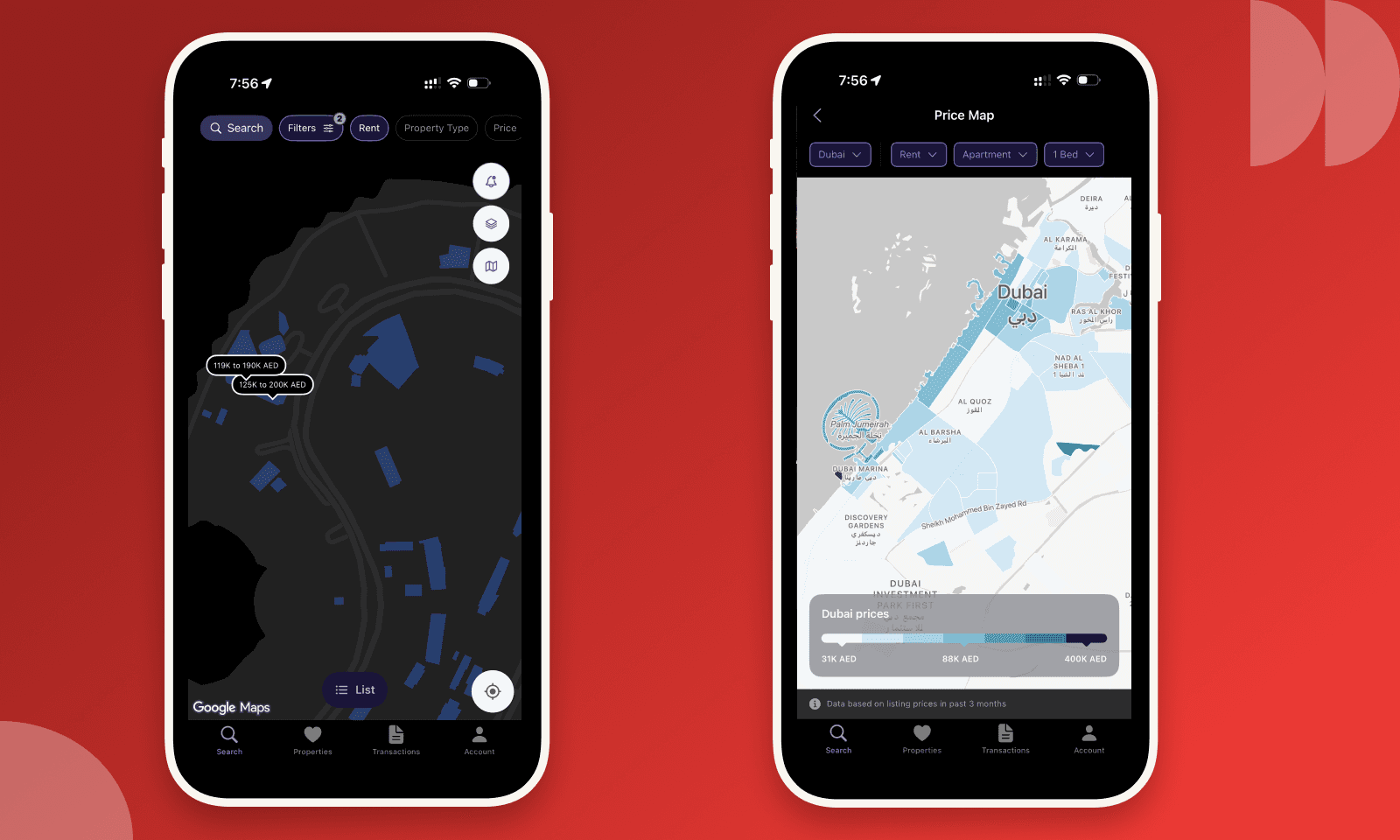
One of the most consistent behaviours research surfaced was users cross-referencing areas — not just evaluating a single property, but trying to understand how one community compared to another in terms of value. That comparison was happening mentally, or across multiple searches, with no visual tool to support it. The price map was the response to that behaviour.
Solution
The solution came down to one principle: the data had to work for every type of user, at every stage of their journey, without asking any of them to go out of their way to find it.
At its heart was a dedicated Market Insights destination, built as a first-class section of the app: transaction data broken down by community, building and bedroom type; price per square foot trends over time; real sales volume and deal frequency. For the first time, that research could happen entirely inside Property Finder rather than across a patchwork of external sources.
The second half of the solution was making sure the same intelligence surfaced contextually where users already spent time. On the listing page, tower-specific transaction history and community insights were woven into the scroll journey, appearing at the point where attention shifts from browsing to evaluating.
Together the two approaches worked as a single system, and Property Finder moved from being a listings platform to the most informed place to make a property decision in the UAE.
Outcomes
- Increased user adoption
- 20% increase in weekly active users.
- Fewer support tickets
- Support tickets decreased 24% within the first month.
- Task completion
- Task completion rate reached an all-time high.